
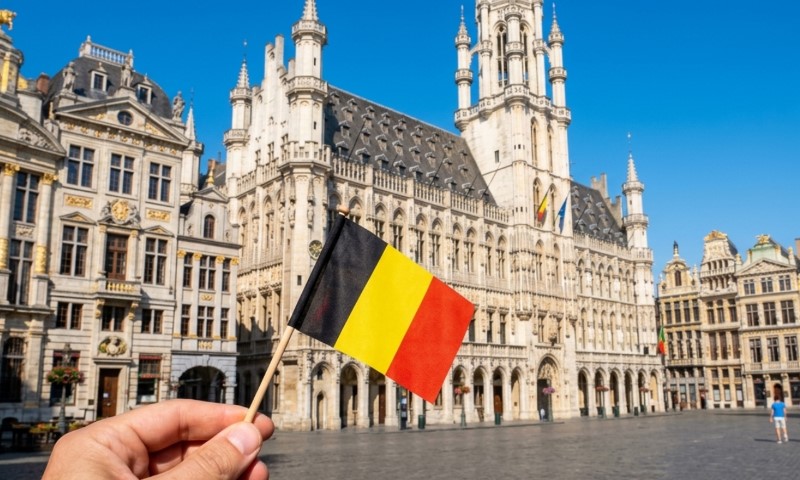
Belgium often surprises American visitors by how much variety fits into a small country. A morning train can carry you from Brussels’ gilded Grand-Place to the canals of Bruges, while another short journey leads to Antwerp or Ghent. The distances feel easy. The local details require preparation.
American citizens can usually visit Belgium visa-free for up to 90 days within the Schengen Area, yet passport rules, upcoming ETIAS requirements and regional transport systems deserve attention.
A good trip depends on knowing how Belgium actually works: multilingual, compact, rain-prone and pleasantly resistant to being rushed.
Check Entry Rules Against Your Travel Date
View this post on Instagram
According to the Belgian Embassy’s visa guidance, U.S. tourists do not need a short-stay visa for visits under 90 days within any 180-day period.
A passport must remain valid for at least three months beyond the planned departure from the Schengen Area, and U.S. guidance recommends at least two blank pages. Border officials may also ask for evidence of sufficient funds and onward travel.
ETIAS creates the main 2026 complication. The European Union plans to introduce the electronic travel authorisation during the final quarter of 2026. As of late July, applications are not open. Once operations begin, visa-exempt Americans will need to apply through the official ETIAS platform before travelling.
Hotel guests are exempt from Belgium’s short-stay address-reporting requirement because the property handles registration. Americans staying in a private home or holiday rental may need to report their Belgian address within three working days through the My Address in Belgium system.
Let the Train Network Shape Your Itinerary
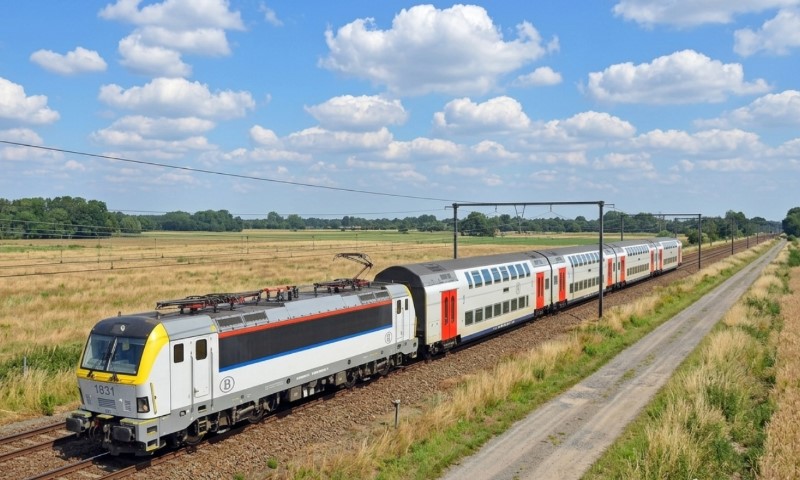
Belgian cities work well as day trips because the national railway network connects the main destinations frequently. A direct journey from Brussels to Bruges averages about 1 hour and 4 minutes, according to the Belgian railway journey guide, making an early departure and relaxed evening return realistic.
Travellers planning several rail excursions can use La Bourse Hotel as their base and explore its rooms in central Brussels before deciding how many nights to spend in the capital.
A major ticketing change took effect on July 1, 2026: SNCB/NMBS no longer sells ordinary domestic tickets onboard. Buy through the railway app, website, station machine or ticket office before stepping onto the train.
Travellers who board without valid proof of payment can face a €90 charge under the railway operator’s onboard ticket policy.
City transport uses separate regional operators. STIB-MIVB runs Brussels services, De Lijn covers Flanders and TEC serves Wallonia. Contactless bank cards and phone wallets work directly on STIB-MIVB vehicles and, as explained in De Lijn’s payment guidance, on its buses and trams.
A fare purchased on a Brussels reader applies to STIB-MIVB travel, so one tap does not create a nationwide pass.
Airport names deserve a careful look. Brussels Airport-Zaventem has a railway station below the terminal and reaches central Brussels in around 18 minutes. The airport train information is useful for checking connections before arrival.
Brussels South Charleroi Airport sits farther away, with coaches connecting it to Brussels-Midi. A cheaper Charleroi flight needs extra transfer time in the schedule.
Belgium Changes Language Faster Than Distance
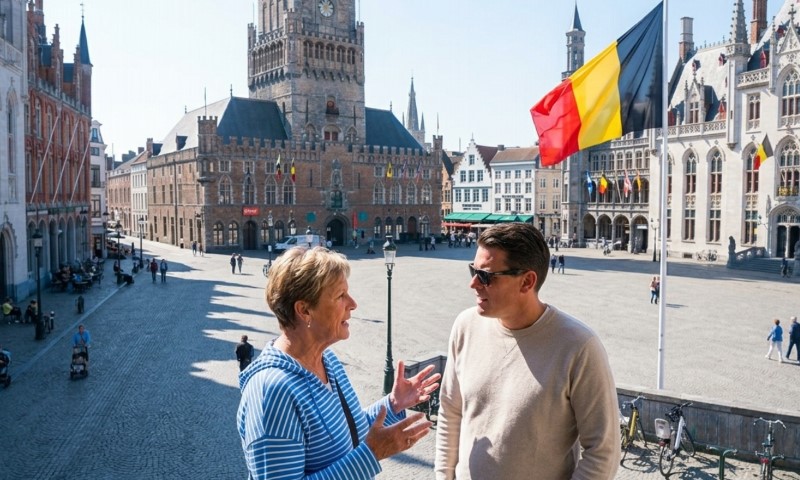
Belgium has Dutch-speaking, French-speaking and German-speaking communities, while Brussels is officially bilingual in French and Dutch.
The Belgian government’s overview explains how the country’s language communities are organised. English is widely usable in hotels, museums and central restaurants, yet a local greeting makes everyday exchanges warmer.
In Flanders, start with “goedendag” or “hallo.” In Wallonia, “bonjour” fits almost everywhere. Brussels accepts either language, and staff will often switch to English after hearing an American accent.
Railway names can create a brief puzzle. Brussels-Midi, Bruxelles-Midi and Brussel-Zuid refer to the same major station. Bruges appears as Brugge on Dutch-language signs, Antwerp becomes Antwerpen, and Ghent becomes Gent. Saving both spellings in a map app prevents confusion.
- Use local spellings when booking transport. Belgian railway apps and station boards often recognise “Gent,” “Brugge” and “Antwerpen” more reliably than their English equivalents.
- French and Dutch pronunciation can differ sharply. A place name may look familiar on a map but sound very different when announced, so checking the platform number is often more useful than relying only on the spoken destination.
- English is less predictable outside major cities. Visitors travelling through smaller Walloon towns or rural areas may find menus and local notices available only in French or Dutch.
- Translation apps help with practical details. Downloading an offline language pack can be useful for parking signs, pharmacy instructions, ticket machines and restaurant menus.
- Language choice can signal location. Dutch signs usually indicate Flanders, French signs point to Wallonia, and bilingual signage is common throughout Brussels.
Cards Are Convenient, and a Little Cash Still Helps
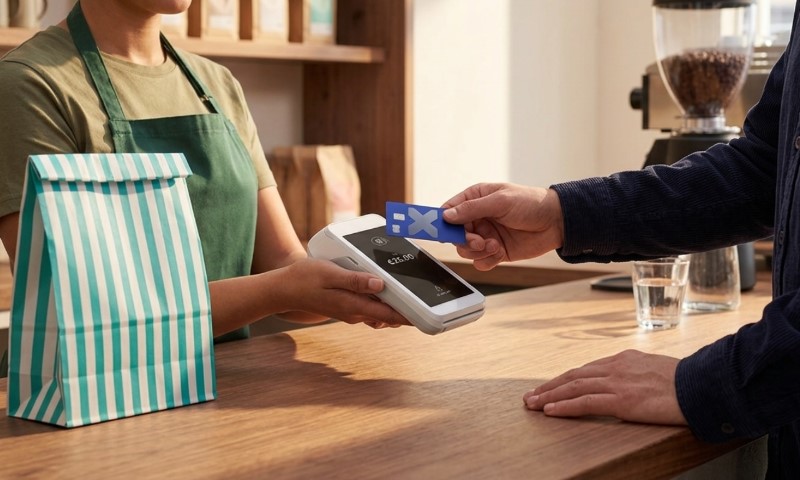
Belgium uses the euro. Many shops and restaurants accept major cards and mobile wallets, although smaller businesses may have different preferences. Carrying modest cash helps at markets, public toilets and independent cafés. Practical advice from Visit Brussels also covers currency exchange and everyday payments.
American visitors sometimes overtip because the U.S. model feels automatic. Restaurant service is already included in Belgian prices. Rounding up or leaving roughly 5 to 10 percent for good service is customary, while 20 percent can feel unusually generous.
Choose payment in euros when a card terminal offers dollars or euros. The card network will then handle the conversion rather than the merchant’s conversion service.
- Tell your bank about the trip. Some card issuers may flag a sudden purchase in Belgium, especially after several transactions in another country like Germany.
- Carry more than one payment method. A backup card helps when a terminal rejects a foreign card or a shop accepts only certain networks.
- Avoid standalone currency-exchange booths at airports. Their rates and fees are often less favourable than withdrawing euros from a bank-operated ATM.
- Check for minimum card amounts. Small cafés, bakeries and market stalls may require a modest minimum purchase before accepting a card.
- Keep coins for everyday expenses. Public toilets, luggage lockers and small vending machines may still require €0.50, €1 or €2 coins.
Meals Move at a Belgian Pace
A Belgian restaurant meal often unfolds slowly, especially in the evening. Servers usually give diners space and may wait for a clear signal before bringing the bill. Saying “L’addition, s’il vous plaît” in French or “De rekening, alstublieft” in Dutch moves the process along politely.
Water may arrive as a paid bottle after a simple request, so specify tap water when available or check the menu. Bread, sauces and side dishes can appear as separate charges depending on the establishment.
Belgian beer deserves measured enthusiasm. Abbey ales and strong blond beers can carry far more alcohol than a familiar American lager, sometimes in a deceptively small glass. Pairing beer with food and alternating with water makes the evening easier to enjoy.
Pack for Cobblestones and Fast Weather Changes
View this post on Instagram
Comfortable shoes matter in historic centres. Grand-Place, Bruges and old Ghent reward walking, though cobblestones become tiring in thin soles and slippery after rain.
Belgian weather changes quickly, even in summer. A light waterproof layer, compact umbrella and clothing that can be added or removed work better than one heavy outfit. Air conditioning may feel less powerful than in many U.S. buildings, particularly in older hotels.
Belgium uses 230-volt electricity with Type C and Type E sockets. Phone and laptop chargers commonly accept a wide voltage range, but check for “100-240V” on the label. Hair tools designed only for 120V need a voltage converter or a dual-voltage replacement.
Stay Alert Without Letting Anxiety Run the Trip
The U.S. Department of State placed Belgium at Level 2, “Exercise Increased Caution,” in an advisory updated on July 23, 2026. The current Belgium travel advisory highlights petty crime, terrorism concerns and demonstrations that may disrupt transport.
For most tourists, practical awareness addresses the likeliest problem. Keep phones and wallets secure around Brussels-Midi, crowded metro cars and major squares. Avoid placing a bag over the back of a restaurant chair. Demonstrations near EU institutions or central Brussels can redirect transport even when gatherings remain peaceful.
Belgium’s emergency number is 112 for ambulance, fire and general emergencies. Police can also be reached at 101, as listed in the State Department’s Belgium country information.
Small Courtesies Travel Well
Belgian service can appear reserved to Americans accustomed to constant check-ins. Politeness is usually quieter. Begin with hello, wait to be acknowledged at a counter and keep your voice moderate on public transport.
Watch for bicycle lanes before stepping off a curb, especially in Flemish cities. Stand clear of train doors while passengers exit. At cafés, ask before moving outdoor furniture.
Belgium rewards travellers who leave room in the day. A museum may lead to an unplanned square, while a rainy hour may become a long lunch. Preparation handles the practical parts. Curiosity takes care of the rest.
FAQs
Final Thoughts
American tourists will find Belgium easy to cross by train and culturally richer than its size suggests. Check passport and ETIAS rules close to departure, buy rail tickets before boarding, learn regional names and keep flexibility in the itinerary.
The best trips grow from noticing how the country changes between stations, ordering a local speciality without overplanning dinner and allowing enough time for the rain to pass.