
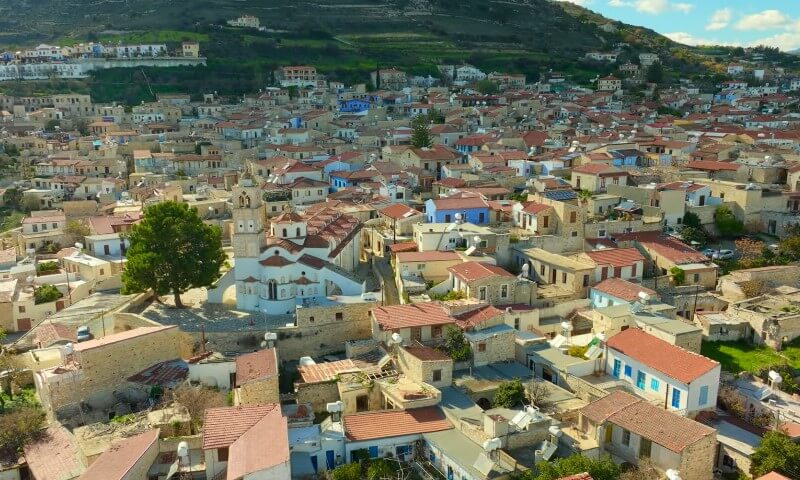
Cyprus offers far more than beach resorts and busy coastal towns.
Mountain villages, ancient churches, local food, family wineries, and forest trails give visitors many reasons to travel inland.
Many villages retain narrow lanes, stone houses, workshops, and small tavernas that offer a closer look at local life.
Cyprus earned a place among the top 50 destinations to visit in 2026, partly due to growing interest in its culture, mountain regions, and outdoor activities.
Let us present you with the villages you should definitely visit while you are in Cyprus.
1. Lasa, Paphos
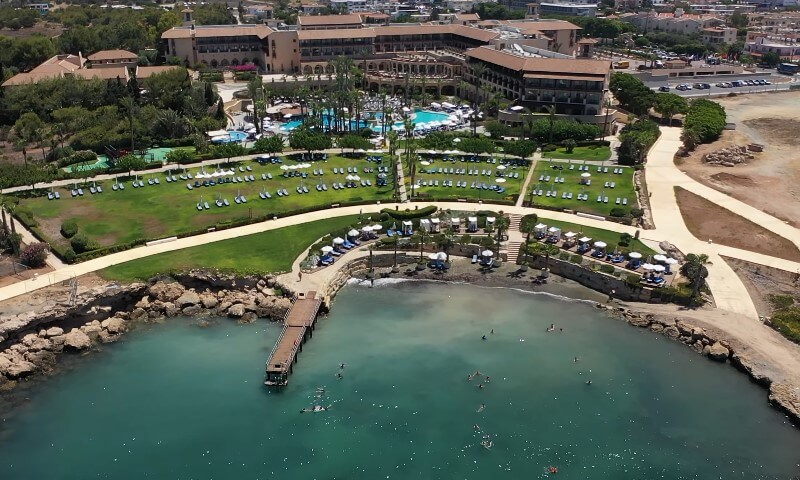
Open fields, quiet roads, and a small rural setting give Lasa a different character than Cyprus’s busier mountain villages.
Located within reach of Paphos, it offers a slower pace without placing visitors too far away from the coast, shops, and major services.
Limited tourist development makes the village suitable for travelers who prefer peaceful surroundings and short walks without crowds.
Nearby roads also make it possible to combine Lasa with other inland stops across the Paphos district.
In 2024, 31.5% of all tourists visiting Cyprus stayed in Paphos, giving it the largest share among the island’s main tourism areas.
Therefore, nobody should be surprised if the interest in village life can also extend past a short visit.
Anyone considering a longer stay in the area can look at new houses in Lasa and see how modern residential development is being introduced into this quieter part of western Cyprus.
Lasa suits visitors and prospective residents who value privacy, open space, and access to Paphos without living in a busy coastal area.
2. Kakopetria, Nicosia
View this post on Instagram
Medieval stone houses, wooden balconies, and narrow alleys give Kakopetria one of the most recognizable old quarters in the Troodos Mountains.
Built along a ridge above a river valley, the historic center is compact enough to explore on foot without following a fixed route.
Working bakeries and coffee shops keep the village active rather than making it feel like an open-air museum.
Fresh bread, local pastries, and Cypriot coffee are easy to find near the older streets.
Nearby tavernas make the village a practical lunch stop during a mountain day trip. Cooler temperatures also create more comfortable walking conditions during summer than those found along the coast.
A relaxed visit may include:
- following the lanes through the old quarter
- stopping beside the river for coffee
- trying local pastries at a bakery
- having lunch at a traditional taverna
Architecture, short walks, mountain scenery, and local food make Kakopetria a good choice for an easy half-day visit.
3. Kalopanagiotis, Nicosia
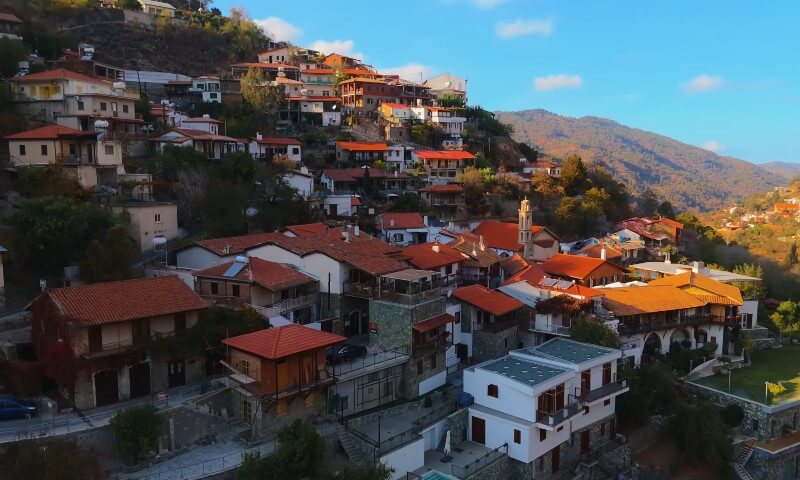
Steep slopes shape almost every view in Kalopanagiotis, where traditional stone buildings descend into the Marathasa Valley.
Forested hills surround the settlement, creating a quiet setting that feels especially removed after coastal day-trippers leave.
Restored houses now operate as boutique guesthouses and agrotourism properties.
Many retain stone exteriors while adding modern rooms, dining spaces, and spa facilities.
Staying overnight allows more time for nearby monasteries, forest paths, and smaller settlements.
Morning and evening walks are especially pleasant during summer, when midday temperatures can make longer outings less comfortable.
Overnight guests can plan activities such as:
- walking through the valley early in the morning
- visiting nearby monasteries and churches
- taking a short forest hike
- dining in the village after day visitors depart
4. Omodos, Limassol
Wine shapes much of daily life in Omodos, one of the main villages in the Limassol highlands.
Monastery Square forms its social center, with cafés, tavernas, and small shops gathered around an open pedestrian area.
Narrow lanes lead away from the square toward old houses, workshops, and wine businesses. Family producers in the surrounding area use indigenous grape varieties such as Xynisteri and Mavro.
Commandaria has particularly strong ties to the region.
Made with sun-dried grapes, it is associated with one of the oldest documented wine-producing areas in the world.
Village restaurants commonly offer grilled meats, halloumi, olives, bread, salads, and slow-cooked Cypriot dishes.
5. Lefkara, Larnaka
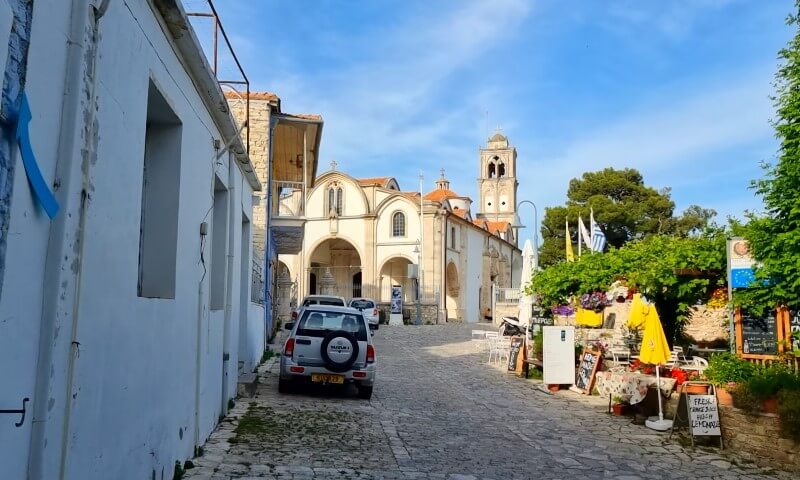
Centuries of lace-making and silversmithing have shaped the identity of Lefkara.
Workshops still line parts of the village, giving visitors a chance to watch craftspeople work rather than simply view finished products in shop windows.
Lefkaritika lace is known for detailed geometric patterns created through careful hand stitching.
Silver workshops produce jewelry, decorative pieces, religious objects, and household items using skills passed through generations.
Local tradition also connects the village with Leonardo da Vinci.
According to the story, he visited in 1481 and purchased a lace altar cloth for Milan Cathedral. Historical proof is limited, but the account remains part of local culture.
6. Lofou and Vouni, Limassol
View this post on Instagram
Quiet stone lanes and vineyard-covered hills define Lofou and Vouni, two wine villages on the southern slopes of the Troodos Mountains.
Both offer a calmer experience than larger stops in the region.
Careful restoration has brought many older homes in Lofou back into use as guesthouses and restaurants.
Wooden doors, stone walls, courtyards, and small churches appear throughout the village.
Vouni often feels even quieter, with shaded streets and restored buildings creating an easy setting for an unhurried walk.
Indigenous grape varieties are cultivated in the surrounding hills, while small family wineries provide tastings during much of the year.
Local tavernas usually focus on mezze, grilled meat, village bread, cheese, olives, and seasonal produce.
7. Pedoulas, Nicosia
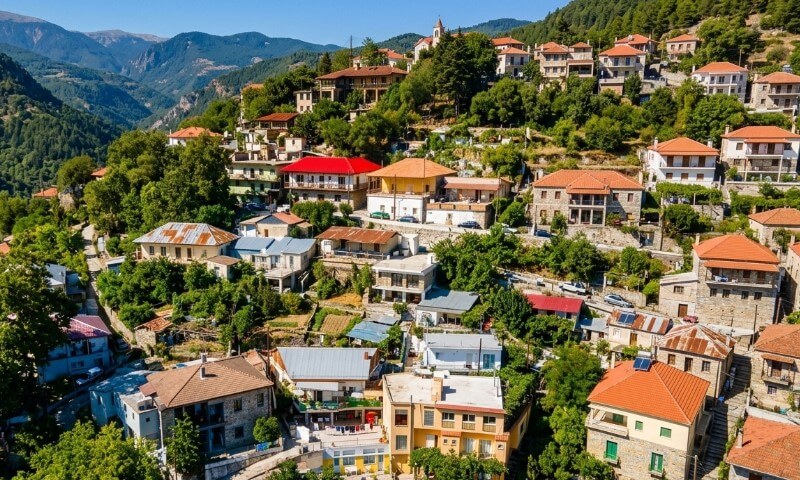
Byzantine art provides one of the strongest reasons to visit Pedoulas.
Forests and steep mountain slopes surround the settlement, while nearby churches and trails make it possible to combine cultural visits with outdoor activity.
Ten painted churches in the Troodos region hold UNESCO status.
Frescoes inside them date between the 11th and 16th centuries and cover walls, arches, and ceilings with detailed religious scenes.
Modest stone exteriors and steep wooden roofs make many of these buildings look simple at first glance.
Interior decoration creates a sharp contrast once visitors step inside.
Forest paths and scenic viewpoints add another reason to stay in the area. Cooler air can make walking more comfortable during warmer months.
Outdoor tourism is also gaining more attention across Cyprus. E4 long-distance route covers roughly 350 miles and links mountain areas, rural settlements, forests, and coastal sections.
FAQs
Summary
Cyprus’s inland villages offer historic architecture, traditional crafts, local wine, regional food, and cooler mountain scenery within a relatively small area.
Watching lace being made, tasting wine at a family-run winery, walking through stone lanes, or viewing centuries-old frescoes can add more variety to a Cyprus trip.
Growing interest in hiking, cycling, and long-distance routes such as the E4 also makes 2026 a strong year to spend more time inland.